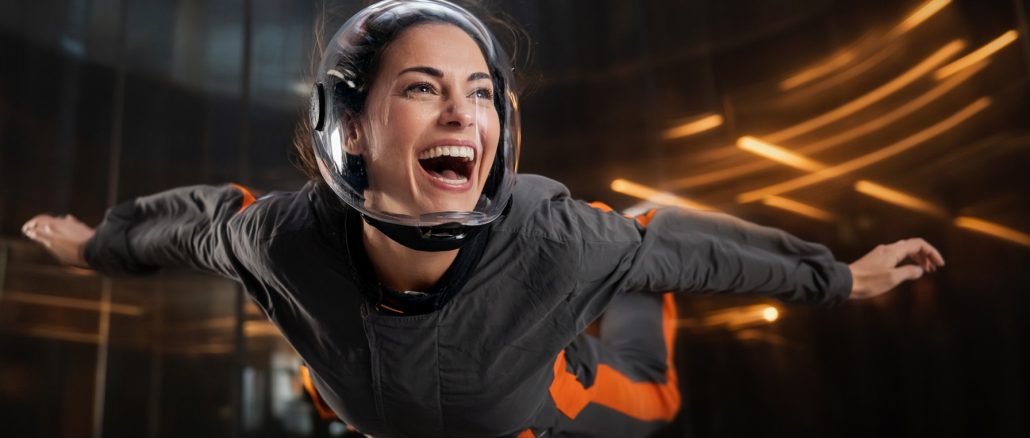
Indoor skydiving is the experience of flying in a vertical wind tunnel — a cylindrical chamber where powerful fans generate a continuous column of upward-moving air strong enough to support a human body in genuine freefall position.
No plane, no parachute, no altitude. Just you, suspended in airflow, experiencing the exact physical sensation of human flight.
Today there are more than 385 wind tunnels operating worldwide — from North America and Europe to Asia and the Middle East. The experience is open to almost anyone: children as young as 3, adults well into their 80s, complete beginners and professional skydivers training for world-level competition.
This guide explains everything you need to know — how it works, who can do it, what to expect on your first flight, how it compares to real skydiving, and what it costs.
What does indoor skydiving feel like? A real first-time iFLY experience — no plane, no parachute.
Ready to book your first flight?
Find indoor skydiving experiences near you — book online, instant confirmation.
How does a wind tunnel work?
A vertical wind tunnel is a large cylindrical chamber — typically 3 to 5 metres in diameter — with a mesh flight deck at its centre. Powerful electric fans, positioned either above or below the chamber depending on the design, generate a continuous column of upward-moving air at speeds between 160 and 280 km/h (100–175 mph).
When you step onto the mesh and lean into the airflow, the upward pressure equals your body weight — and you float. The sensation is immediate and unmistakable.
The physics are identical to outdoor freefall. A skydiver exiting an aircraft at 14,000 feet accelerates to a terminal velocity of approximately 200 km/h before deploying the parachute. A wind tunnel replicates that exact airspeed in a controlled, ground-level environment. The key difference: in a tunnel you can do it again immediately, adjust your position in real time, and have an instructor beside you throughout.
Modern tunnels feature tempered glass walls so spectators can watch, variable wind speeds adjustable to any skill level, and smooth laminar airflow technology that makes stable flight possible even for complete beginners on their very first attempt.
EXPLORE BY CONTINENT
Who can do indoor skydiving? Age, weight and health requirements
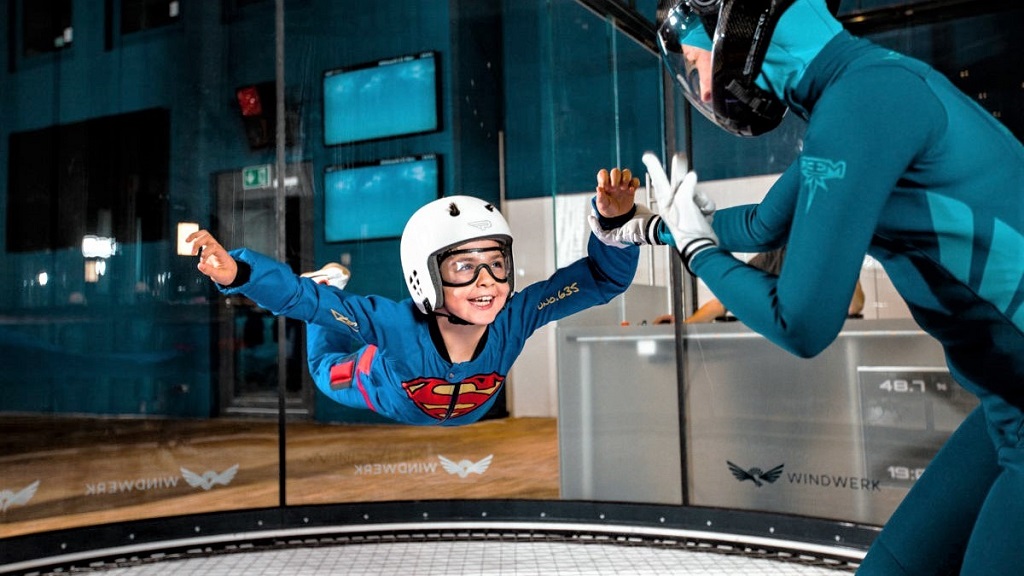
One of the biggest surprises for first-time visitors: indoor skydiving is genuinely accessible. The age and weight ranges are broader than most people expect, and the barriers to participation are remarkably low.
| Requirement | Typical standard |
|---|---|
| Minimum age | 3 years (with adult supervision or held by instructor) |
| Maximum age | No hard limit — participants in their 80s fly regularly |
| Weight limit | 100–120 kg (220–265 lbs) depending on facility |
| Height | No restriction |
| Health conditions | No serious spinal, shoulder or neck injuries; no recent surgery |
| Pregnancy | Not recommended |
| Prior experience | None required — instructors guide you from the first second |
Participants under 18 require a signed parental consent form, and children under approximately 5 may need to be held throughout the flight rather than flying independently. Exact policies vary by facility, so it is always worth checking directly when booking for young children.
Additionally, if you have a specific health condition — a recent operation, a heart condition, or a physical disability — call the tunnel before booking. Most modern facilities are experienced at accommodating a wide range of needs, and many have adapted programmes for wheelchair users and people with physical disabilities.
What to expect on your first flight — step by step
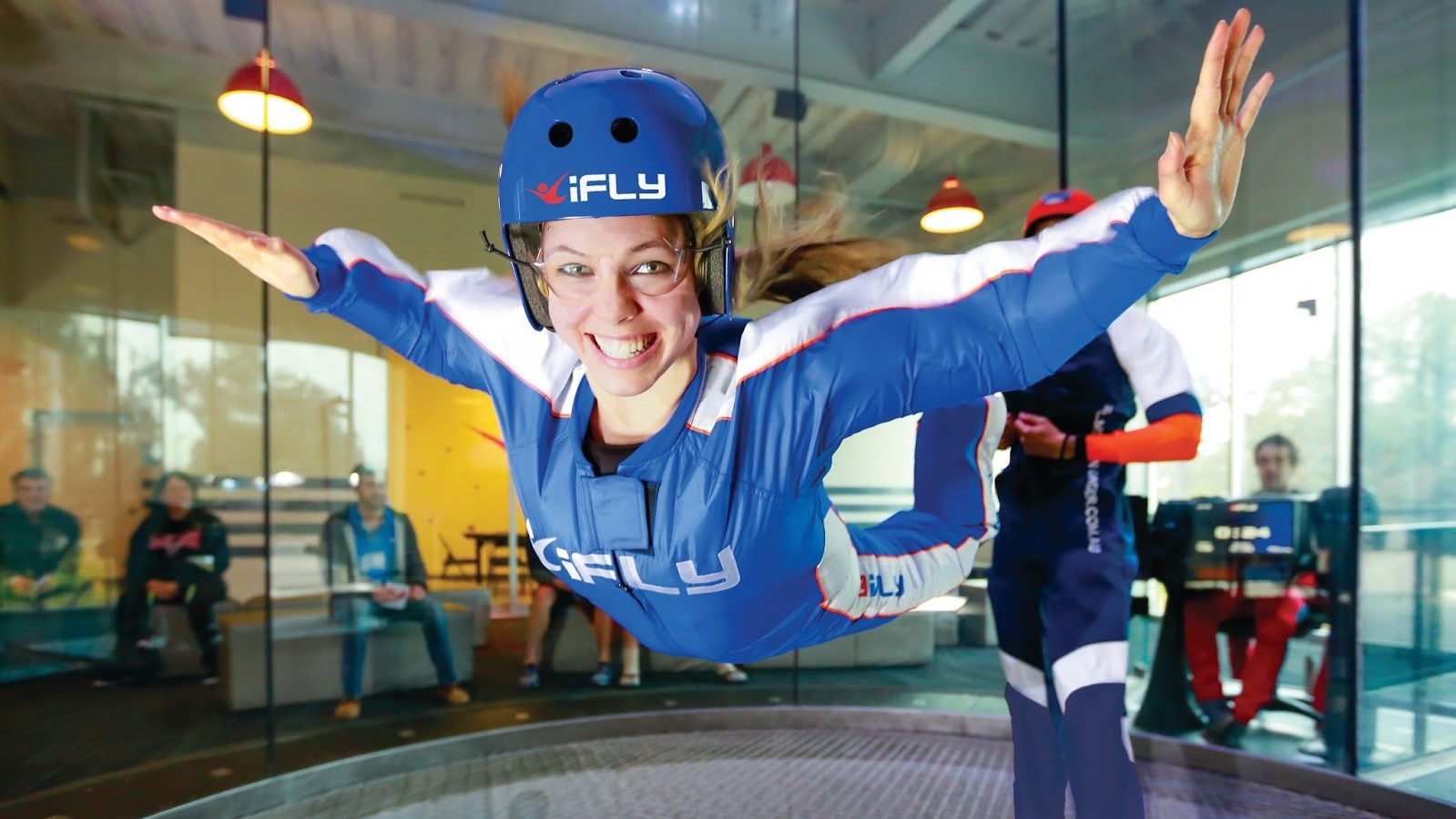
First-time sessions follow the same structure at every tunnel in the world. Here is exactly what happens from the moment you arrive:
- Check in and sign the waiver — standard procedure, takes about 5 minutes. Parents or guardians must be present for under-18 participants.
- Safety briefing (15–20 minutes) — a certified instructor walks you through basic body position: chin up, hips forward, arms slightly bent, legs hip-width apart. You practise on the ground before entering the tunnel. Hand signals are explained (it is too loud to speak inside).
- Gear up — you receive a full flight suit (worn over your clothes), a helmet, goggles, and earplugs. Everything is included in the standard package price.
- Your first flight (60 seconds) — the instructor enters the tunnel with you. The first few seconds feel genuinely surreal. Within 30 seconds, most people are smiling uncontrollably. The instructor uses hand signals to guide your position.
- Second flight (60 seconds) — with the basics stable, instructors typically introduce a controlled turn or show you how to move up and down in the column.
- High flight (optional, usually an extra €10–€15) — the instructor grabs your arm and takes you from the floor to the top of the tunnel in a single motion. It lasts about 10 seconds and is, by near-universal consensus, the best part of the entire experience.
- Debrief — your instructor gives feedback and, at most facilities, a video of your flight is available to purchase or download.
Total time at the facility: 60–90 minutes. Actual air time: 2 minutes. Those 2 minutes are rarely forgotten.
➜ Find a wind tunnel and book your first flight
Indoor skydiving vs real skydiving — key differences
The question comes up every time: does indoor skydiving “count” as real skydiving? The answer depends entirely on what you are looking for.
In terms of physical sensation — the wind, the resistance, the weightlessness — the experience is identical. Indeed, this is not marketing language: professional skydivers… and world champions use wind tunnels specifically because the training environment is more precise, more repeatable, and more cost-efficient than jumping from an aircraft.
| Indoor skydiving | Outdoor skydiving | |
|---|---|---|
| Cost per session | €50–€100 | €150–€350 |
| Minimum age | 3 years | 14–16 years (tandem) |
| Weather dependency | None | High |
| Air time (standard session) | 2 minutes | ~60 seconds per jump |
| Altitude involved | None | 3,000–4,500 metres |
| Parachute required | No | Yes |
| Suitable for health restrictions | Often yes | Often no |
| Training repetitions per hour | Up to 30 | 1–2 |
| Same-day booking | Usually possible | Rarely possible |
The honest distinction: outdoor skydiving includes the aircraft ascent, the door exit at altitude, and the parachute landing — elements that are not part of indoor flying, and that many people find constitute the most powerful part of the experience. For pure flight sensation and skill development, a wind tunnel is unmatched. For the full parachuting experience, you need the sky.
How much does indoor skydiving cost?
A standard first-time package — which includes the safety briefing, full gear rental, and two 60-second flights — costs approximately:
- USA: $60–$120 per person
- UK: £55–£85
- Western Europe: €55–€90
- Eastern Europe: €35–€60
- Asia: $30–$75 USD equivalent
- Middle East: $55–$95 USD equivalent
- Australia / New Zealand: AUD $75–$130
Prices vary significantly by location, facility, and package length. Furthermore, adding a video of your flight ($20–$50) and a high flight ($10–$15) are the two most common extras. As a result, group bookings and off-peak sessions generally offer better rates.
For a complete country-by-country breakdown, package comparisons, and advice on how to find the best price:
➜ Indoor Skydiving Prices 2026 — Complete Cost Guide by Country
Compare prices and book at verified tunnels worldwide
Secure online booking · Instant confirmation · Free cancellation on most experiences
Where can I fly? Find a wind tunnel near you
There are currently 385 wind tunnels worldwide — more than at any point in history, with new facilities opening every year across all continents. Whether you are planning a trip or looking for something local, the chances are there is a tunnel closer than you think.
Browse the ISW global directory by region:
- Indoor skydiving in Europe — 158 tunnels across 30+ countries, including Germany, France, the UK, Poland, the Netherlands and Spain
- Indoor skydiving in North America — 93 tunnels in the USA and Canada
- Indoor skydiving in Asia — 52 tunnels from Japan and South Korea to India and China
- Indoor skydiving in the Middle East — 16 tunnels including Dubai, Abu Dhabi and Qatar
- Indoor skydiving in South America — 12 tunnels
- Indoor skydiving in Oceania — 11 tunnels across Australia and New Zealand
- Indoor skydiving in Africa — 4 tunnels
Or use our interactive locator to find the nearest open facility to your current location — results include GPS coordinates, opening hours, contact details, and direct booking links:
➜ Find a wind tunnel near me →
Frequently asked questions about indoor skydiving
The questions below cover the most common concerns before a first flight. The FAQ schema is also active on this page, making these answers eligible for Google’s rich result snippets.
Is indoor skydiving safe?
Yes. Indoor skydiving is one of the safest adventure activities available. You remain at ground level throughout, the wind speed is precisely controlled by certified operators, and a licensed instructor is inside the tunnel with you at all times. Serious injuries are extremely rare. All participants receive a safety briefing and wear a full flight suit, helmet, goggles and earplugs before entering the tunnel.
How long is an indoor skydiving session?
A standard first-time package includes two flights of approximately 60 seconds each, plus a 15–20 minute safety briefing. Total time at the facility is usually 60–90 minutes. The actual air time — 2 minutes — tends to feel considerably longer once you are inside the column.
What do I wear for indoor skydiving?
Wear comfortable clothes you can move in — jeans and a t-shirt or sportswear work well. Avoid loose items such as scarves, jewellery or items with sharp edges. The facility provides a full flight suit worn over your clothes, a helmet, goggles and earplugs. Lace-up trainers or athletic shoes are required; open-toed shoes and boots are not permitted in most tunnels.
Can children do indoor skydiving?
Yes. Most wind tunnels accept children from the age of 3 upwards. Very young children (typically under 5 or 6) may need to be held throughout the flight rather than flying independently. Parental consent is required for all participants under 18. There is no upper age limit — adults in their 70s and 80s fly regularly at facilities worldwide.
Do I need any experience to try indoor skydiving?
No experience is required. First-time packages are designed specifically for complete beginners, and instructors guide you through every second of your flight. You will receive a safety briefing and brief ground training before entering the tunnel. Most first-time flyers are floating stably within 30 seconds of entering the chamber.
Is indoor skydiving the same as real skydiving?
The physical sensation of freefall — wind, resistance, weightlessness —
is identical. In fact, professional skydivers use wind tunnels for training specifically because the environment replicates freefall so accurately. However, outdoor skydiving also includes the aircraft ascent, the door exit at altitude, and the parachute descent. Indoor skydiving is also significantly cheaper, weather-independent, and accessible to a much wider range of ages and fitness levels.
Can I do indoor skydiving if I am afraid of heights?
Yes — and fear of heights is one of the most common reasons people choose indoor skydiving over the outdoor version. The entire experience takes place at ground level. Even the optional high flight reaches a maximum of 8–10 metres. There is no open altitude, no jump, and no exposure that triggers acrophobia. Many people who are afraid of heights describe indoor skydiving as the only flying experience they have genuinely enjoyed.
How do I book an indoor skydiving session?
Find a wind tunnel near you using our interactive locator or the world directory, then book directly through the facility’s website or via Viator for facilities that list there. Most tunnels accept same-day bookings during quieter periods, but weekends and holidays fill up quickly — booking at least one week in advance is recommended for popular locations. Gift vouchers are available at most facilities and make an excellent present for birthdays and special occasions.